You’ve got your monthly budget dialed in. Rent, groceries, utilities — everything’s accounted for. Then December hits, and suddenly you’re staring at holiday gifts, travel costs, and your heating bill doubling. Sound familiar? You’re not alone. According to the National Retail Federation, Americans planned to spend an average of $902 during the 2024 winter holidays alone. Add in summer vacations, back-to-school shopping, car registrations, and annual insurance premiums, and it’s easy to see why so many carefully crafted budgets fall apart throughout the year.
The good news? Seasonal expenses don’t have to wreck your financial plans. With a bit of foresight and some strategic planning, you can smooth out these predictable spending spikes and finally create a yearly budget that actually works — no last-minute credit card swipes required.
Understanding Seasonal Expenses: The Budget Killers You Can Actually Predict
Seasonal expenses are costs that don’t occur monthly but show up with clockwork regularity throughout the year. They’re the reason your “perfect” budget suddenly feels inadequate every few months. Unlike true emergencies — a broken water heater, unexpected medical bills — seasonal expenses are entirely predictable. We just tend to ignore them until they arrive.
These costs typically fall into several categories. Holiday spending covers gifts, decorations, special meals, and travel. Weather-related expenses include higher utility bills in summer and winter, plus seasonal home maintenance like gutter cleaning or HVAC servicing. Annual obligations encompass things like property taxes, insurance premiums, vehicle registrations, and membership renewals. Then there are lifestyle-driven costs: summer camps, back-to-school supplies, seasonal wardrobe updates, and vacation travel.
A 2023 Bankrate survey found that 57% of American adults couldn’t cover a $1,000 emergency expense from savings. While seasonal expenses aren’t emergencies, the principle applies — when these predictable costs arrive without preparation, they create the same financial stress.
Why Your Monthly Budget Keeps Failing You
Traditional budgeting advice focuses heavily on monthly income and expenses. This works beautifully for fixed costs like rent and subscriptions, but it creates a dangerous blind spot. When December rolls around and you need $800 for gifts that weren’t in your monthly plan, you face an unpleasant choice: blow up your budget or reach for credit cards.
The result? Many people end up paying for last year’s holidays well into the new year, accumulating interest charges that make those seasonal expenses even more costly. Breaking this cycle requires shifting from a purely monthly mindset to a full-year perspective.
How to Set an Annual Budget That Accounts for Everything
Setting an annual budget starts with a simple but often overlooked question: what exactly is a plan for income and expenses over a period of time? At its core, a budget is a financial roadmap that projects your expected income against anticipated expenses, helping you allocate resources toward your goals. An annual budget extends this concept across twelve months, capturing the full picture of your financial life rather than isolated monthly snapshots.
Here’s how to build one that actually captures seasonal reality:
Step 1: Audit Your Past Year of Spending
Pull out your bank statements and credit card records from the last twelve months. Go through month by month and flag every expense that wasn’t part of your regular monthly routine. Look for patterns: insurance payments, holiday shopping spikes, summer vacation costs, annual subscriptions, vehicle maintenance.
Most people discover they’re spending between $2,000 and $5,000 annually on these “irregular” expenses — money that vanishes from their budget seemingly without explanation. Once you see the total, you’ll understand why monthly budgeting alone wasn’t working.
Step 2: Create Your Seasonal Expense Calendar
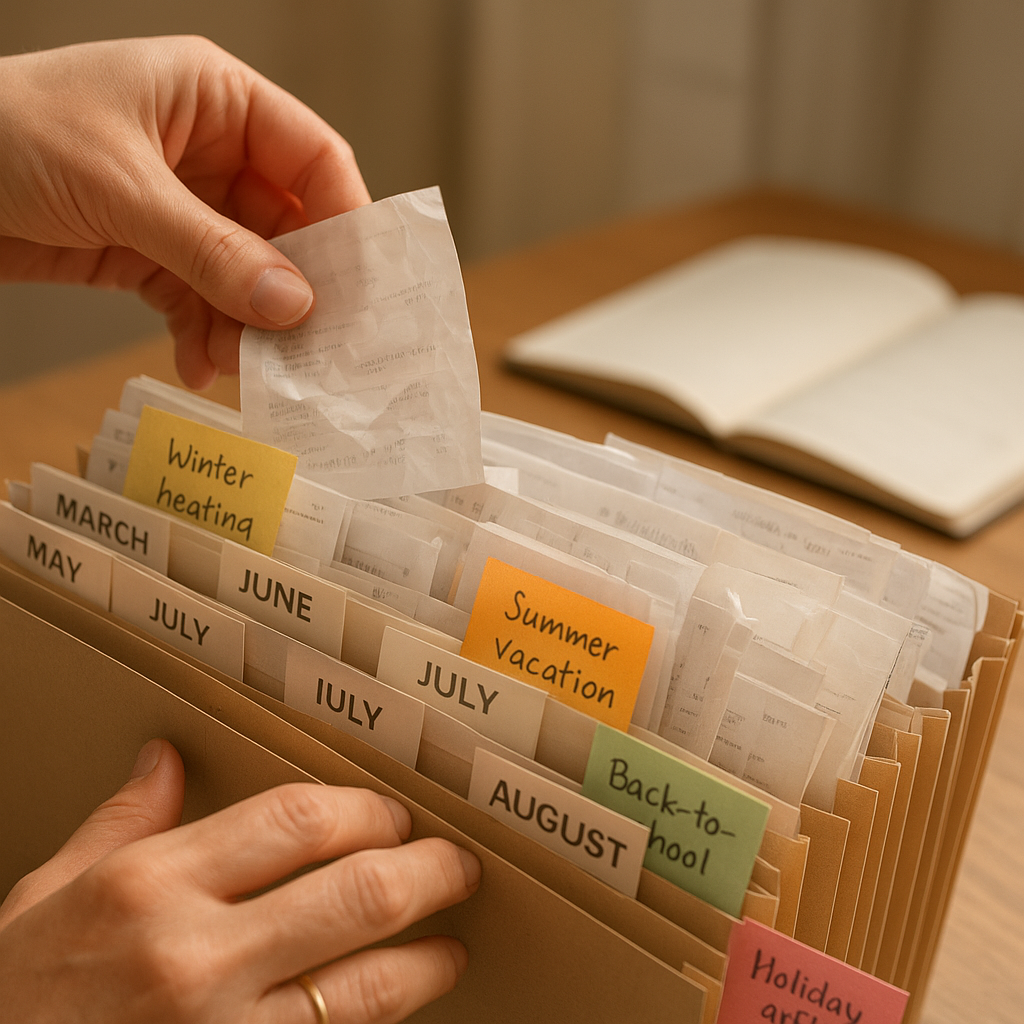
Map out the entire year and mark when each seasonal expense typically occurs. January might include annual insurance premiums and post-holiday credit card bills. April could bring property taxes and spring home maintenance. July might feature vacation spending and higher cooling costs. November and December pack in holiday expenses, while September hits parents with back-to-school costs.
This visual calendar becomes your early warning system. You’ll never again be “surprised” by expenses that arrive at the same time every single year.
Step 3: Calculate Your True Monthly Savings Need
Take the total of all your seasonal expenses and divide by twelve. That’s the amount you need to set aside every month to cover these costs without stress. If your seasonal expenses total $4,800 annually, you need to save $400 monthly — just for these predictable irregular costs.
This number might feel uncomfortable at first. But compare it to the alternative: scrambling to find $1,200 in December or putting vacation costs on a credit card at 24% APR. The math quickly favors preparation.
Building Your Seasonal Sinking Fund Strategy
A sinking fund is simply money you set aside gradually for a specific future expense. Instead of one massive savings account, you create multiple mini-funds for different seasonal purposes. This approach transforms overwhelming annual costs into manageable monthly contributions.
Consider establishing separate sinking funds for major seasonal categories. A holiday fund receiving $75 monthly gives you $900 by December. A travel fund with $100 monthly provides $1,200 for summer vacation. A home maintenance fund at $50 monthly accumulates $600 for seasonal repairs and upkeep.
The specific amounts depend entirely on your spending patterns and priorities. Someone who loves elaborate holiday celebrations might allocate more there, while a frequent traveler prioritizes their vacation fund. The key is honest assessment of your actual spending, not what you wish you spent.
Automating Your Way to Success
Willpower is unreliable. Automation isn’t. Set up automatic transfers on payday that move money directly into your sinking funds before you have a chance to spend it elsewhere. Most banks allow multiple savings accounts with custom names — “Holiday Fund,” “Summer Travel,” “Annual Insurance” — making it easy to track progress toward each goal.
High-yield savings accounts add another advantage. With rates often exceeding 4% APY at online banks, your seasonal savings can actually earn meaningful interest while waiting to be used.
What Are Some Typical Expenses to Include in a Budget?
When building your comprehensive budget, certain expense categories deserve attention beyond the obvious monthly bills. Housing costs include rent or mortgage, but also property taxes, HOA fees, and seasonal maintenance. Transportation encompasses car payments, insurance premiums, registration fees, and anticipated repairs.
Personal expenses cover clothing (including seasonal wardrobe shifts), haircuts, gifts for birthdays and special occasions, and hobby-related costs. Family expenses might include childcare, school supplies, activity fees, and summer camps. Don’t forget medical costs like annual checkups, dental cleanings, and prescription expenses that fluctuate throughout the year.
Financial obligations extend beyond monthly debt payments to include annual credit card fees, professional memberships, and tax preparation costs. Finally, lifestyle and entertainment expenses cover streaming services, but also concert tickets, sporting events, and those seasonal celebrations that make life enjoyable.
The typical budget should also include a buffer category — money set aside for expenses that don’t fit neatly elsewhere. Aim for 5-10% of your total budget as contingency, providing breathing room when life inevitably surprises you.
How to Budget for Seasonal Work and Variable Income
Budgeting with seasonal income presents unique challenges. If you work in landscaping, retail, tourism, education, or any field with fluctuating earnings, traditional budgeting advice falls short. Your income varies dramatically, but your bills remain frustratingly consistent.
The solution starts with calculating your annual income average. Add up everything you earned last year and divide by twelve. This becomes your baseline monthly income for budgeting purposes, regardless of what any particular month actually brings in.
During high-earning months, live on your average budgeted amount and bank the excess in a dedicated account. When lean months arrive, draw from this reserve to maintain consistent spending. This approach — sometimes called “income smoothing” — transforms erratic earnings into predictable cash flow.
Prioritize building a larger emergency fund than traditionally recommended. While standard advice suggests three to six months of expenses, seasonal workers benefit from six to twelve months of coverage. This buffer protects against both seasonal downturns and truly unexpected disruptions.
Practical Strategies for Common Seasonal Challenges
Let’s tackle specific seasonal scenarios with actionable approaches. For holiday spending, set a firm total budget based on what you’ve saved, not what you wish you could spend. Create gift lists early with price limits per person, and track every purchase in real-time. Consider alternatives like homemade gifts, experience gifts, or family gift exchanges that reduce per-person spending.
Utility bill fluctuations respond well to budget billing programs offered by many providers. These plans average your annual usage into equal monthly payments, eliminating summer and winter spikes. Alternatively, track your bills from previous years and create your own average, setting aside the difference during low-usage months.
Back-to-school costs hit families hard each August and September. The National Retail Federation estimated families with school-age children planned to spend an average of $875 in 2024. Combat this by shopping sales throughout the year rather than all at once, using hand-me-downs and secondhand options where possible, and building a dedicated sinking fund starting each September for the following year. Families looking for comprehensive approaches to managing household finances might find these budgeting strategies for families particularly useful for coordinating expenses across multiple schedules and priorities.
Annual insurance premiums often offer significant discounts for paying in full rather than monthly installments. If your annual premium is $1,200, paying monthly might add $100 or more in fees. A sinking fund lets you capture these savings while still spreading the cost mentally across twelve months.
Maintaining Flexibility Without Losing Control
The best budgets include built-in flexibility. Life rarely follows plans exactly, and rigid budgets often collapse when reality intrudes. Build adaptability into your system through regular reviews and adjustments.
Schedule quarterly budget check-ins — not just to track progress, but to reassess your assumptions. Maybe holiday spending ran higher than expected, suggesting you need larger sinking fund contributions next year. Perhaps you overestimated vacation costs and can redirect funds elsewhere. These adjustments aren’t failures; they’re refinements that make your budget increasingly accurate over time.
Embrace the concept of “budget seasons” that mirror actual seasons. Your financial priorities naturally shift throughout the year. Summer might emphasize travel and outdoor activities, while winter focuses on home comfort and holidays. Aligning your budget with these natural rhythms feels more intuitive and sustainable than fighting against them.
Technology can significantly simplify seasonal expense tracking. Budgeting apps like YNAB, EveryDollar, or even simple spreadsheets help you visualize spending patterns, set savings goals, and receive alerts when you approach category limits. Find a system that matches your style — detailed spreadsheets for analytical types, simple apps for those who prefer minimalism — and commit to consistent use. For ongoing support in maintaining your financial discipline, these tips to stick to your budget can help reinforce the habits you’re building throughout the year.
Conclusion
Seasonal expenses will never disappear. Holidays come every year, insurance premiums renew on schedule, and summer inevitably tempts us with travel opportunities. But these predictable costs only cause stress when they catch us unprepared.
The strategies outlined here — auditing past spending, creating expense calendars, establishing sinking funds, and building flexibility into your system — transform seasonal budgeting from reactive scrambling to proactive planning. By calculating your true annual costs and spreading them across twelve manageable monthly contributions, you eliminate the feast-or-famine cycle that derails so many budgets.
Start small if needed. Even setting aside $50 monthly toward seasonal expenses creates meaningful progress. The goal isn’t perfection; it’s improvement. Each year you refine your approach, your budget becomes more accurate, your stress decreases, and your financial confidence grows. That’s the real reward of integrating seasonal expenses into your yearly planning — not just surviving each season, but genuinely enjoying them without financial anxiety tagging along.